


Anahtar Kelimeler
Nasıl Atıf Yapılır
Öz
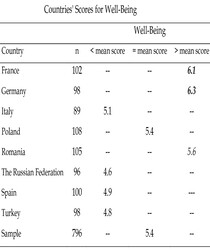
Sosyoekonomik özelliklerin bireylerin refahı üzerinde bazı olumlu veya olumsuz etkileri vardır. Ancak, sosyoekonomik özelliklerin üniversite öğrencilerinin refahına etkisi üzerine çok az çalışma yapılmıştır. Bu çalışma, bu eksikliği gidermek amacıyla Fransa, Almanya, İtalya, İspanya, Polonya, Romanya, Rusya Federasyonu ve Türkiye dahil sekiz Avrupa ülkesinde gerçekleştirilen bir anket çalışmasına ait sonuçları göstermektedir. Araştırmanın örneklemini 796 üniversite öğrencisi oluşturmuş olup, veri toplamak için kapalı uçlu sorulara dayalı çevrimiçi bir anketten yararlanılmıştır. Veriler çoklu doğrusal regresyon kullanılarak analiz edilmiştir. Bu çalışma, bireysel gücün farkında olmanın refahı olumlu etkilediğini göstermiştir. Ayrıca, gelecekteki finansal güvenliğe ilişkin olumlu beklentilerin, üniversite öğrencilerinin refahı üzerine pozitif etkiye sahip olduğu sonucuna ulaşılmıştır. Sosyal etkileşimin yüksek olmasının bireysel refah üzerindeki etkisinin sınırlı olduğu tespit edilmiştir. Ayrıca bu çalışmada, Fransa ve Almanya’dan ankete katılan öğrencilerin daha yüksek refah puanına sahip oldukları bulunmuştur. Bu durum devlet tarafından sağlanan sosyal desteklerin önemini ortaya koymuştur. Sosyal ve mali destek, üniversite öğrencilerinin genel refahını artırmak için faydalı olabilir. Politika yapıcılar, sosyal refahın toplum için önemini yeniden ele almalıdır.
Makale Kullanım İstatistikleri
İndirmeler
Referanslar
Bakker, A. B., Hetland, J., Olsen, O.K., & Espevik, R. (2019). Daily strengths use and employee well-being: The moderating role of personality. Journal Occupational Organizational Psychology, 92(1), 144-168. https://doi.org/10.1111/joop.12243
Bea, M. D, & Yi, Y. (2019). Leaving the financial nest: Connecting young adults' financial independence to financial security. Journal of Family and Marriage, 81(2), 397-414. https://doi.org/10.1111/jomf.12553
Benson, T., Sladen, J., Liles, A., & Potts, H. W. W. (2019). Personal well-being score (PWS)-a short version of ONS4: development and validation in social prescribing. BMJ Open Quality, 8, e000394. https://doi.org/10.1136/ bmjoq-2018-000394
Bhullar, N., Hine, D.W., & Phillips, W.J. (2014). Profiles of psychological well-being in a sample of Australian university students. International Journal of Psychology, 49(4), 288-294. https://doi.org/10.1002/ijop.12022
Capone, V., Donizzetti, A. R., & Petrillo., G. (2018). Classroom relationships, sense of community, perceptions of justice, and collective efficacy for students' social well-being. Journal Community Psychology, 46(3): 374-382. https://doi.org/10.1002/jcop.21943
Cicognani, E., Pirini, C., Keyes, C., Joshanloo, M., Rostami, R., & Nosratabadi, M. (2008). Social participation, sense of community and social well-being: A study on American, Italian and Iranian University Students. Social Indicators Research, 89, 97–112. https://doi.org/10.1007/s11205-007-9222-3
Conradson, D. (2016). Fostering student mental well-being through supportive learning communities. The Canadian Geographer/Le Géographe canadien, 60(2): 239-244. https://doi.org/10.1002/ijop.1202210.1111/cag.12276
Dewa, L.H., Cecil, E., Eastwood, L., Darzi, P., & Aylin, P. (2018). Indicators of deterioration in young adults with serious mental illness: a systematic review protocol. Systematic Reviews 7, 123 (2018). https://doi.org/10.1186/s13643-018-0781-y
Diener, E., Pressman, S.D., Hunter, J., & Delgadillo-Chase, D. (2017). If, why, and when subjective well-being influences health, and future needed research. Applied Psychology: Health Well-Being, 9(2), 133-167. https://doi.org/10.1002/ijop.1202210.1111/aphw.12090
Diener E., Lucas R.E., & Scollon C.N. (2009). Beyond the hedonic treadmill: Revising the adaptation theory of well-being. In: Diener E. (eds) The Science of Well-Being. Social Indicators Research Series, 37, 103-118. Springer, Dordrecht.
Doré, I., O'Loughlin, J. L., Sabiston, C. M., & Fournier, L. (2017). Psychometric evaluation of the mental health continuum–short form in French Canadian young adults. The Canadian Journal of Psychiatry, 62(4), 286-294. https://doi.org/10.1177/0706743716675855
Downward, P., & Dawson, P. (2016). Is it pleasure or health from leisure that we benefit from most? An analysis of well-being alternatives and implications for policy. Social Indictors Research 126, 443–465. https://doi.org/10.1007/s11205-015-0887-8
Dubreuil, P., Forest, J., Gillet, N., Fernet, C., Thibault-Landry, A., Crevier-Braud, L., & Girouard, S. (2016). Facilitating well-being and performance through the development of strengths at work: Results from an intervention program. International Journal of Applied Positive Psychology, 1, 1–19. https://doi.org/10.1007/s41042-016-0001-8
Easterlin, R. A. (2005). Building a better theory of well-being. In L. Bruni & P. L. Porta, Economics & Happiness: Framing the Analysis, 29–64. Oxford University Press. https://doi.org/10.1093/0199286280.003.0002
Elliott, W., & Lewis, M. (2015). Student debt effects on financial well-being: Research and policy implıcations. Journal of Economic Surveys, 29(4), 614-636. https://doi.org/10.1002/ijop.1202210.1111/joes.12124
European Social Survey/ESS. (2015). Measuring and reportıng on Europeans' well-being: Findings from the European social survey. [Cited 23.05.2020]. Retrieved from https://www.europeansocialsurvey.org/findings/wellbeing.html
Gashi, A., & Mojsoska-Blazevski, N. (2016). The Determinants of students' well-being in secondary vocational schools in Kosovo and Macedonia. European Journal of Education, 51(3), 333-344. https://doi.org/10.1002/ijop.1202210.1111/ejed.12181
Green, C. P., & Leeves, G.D. (2013). Job security, financial security and worker well-being: New evidence on the effects of flexible employment. Scottish Journal of Political Economy, 60(2), 121-138. https://doi.org/10.1002/ijop.1202210.1111/sjpe.12005
Green, L. R., Richardson, D. S., Lago, T., & Schatten-Jones, E. C. (2001). Network correlates of social and emotional loneliness in young and older adults. Personality and Social Psychology Bulletin, 27(3), 281-288. https://doi.org/10.1177/0146167201273002
Griggs, S., & Crawford, S. L. (2019). Differences in hope, core self‐evaluations, emotional well-being, and health risk behaviors in freshman university students. Nursing Forum, 54, 505-512. https://doi.org/10.1111/nuf.12364
Güven, C., Senik, C., & Stichnoth, H. (2012). You can't be happier than your wife. Happiness gaps and divorce. Journal of Economic Behavior & Organization, 82(1), 110-130. https://doi.org/10.1016/j.jebo.2012.01.003
Hair, J. F., Black, W. C., Babin, B. J. & Anderson, R. E. (2014). Multivariate data analysis. Pearson New International Edition. Harlow : Pearson Education Limited.
Hair, J. F., Celsi, M., Money, A. H., Samouel, P., & Page, M. (2015). The essentials of business research methods. Third edition. New York: Routledge.
Hansen, H., & Schultz-Nielsen, M. L. (2015). Social assistance in five countries in North-Western Europe. The Rockwool Foundation Research Unit, Study Paper No. 104.
Heckman, S., Lim, H., & Montalto, C. (2014). Factors related to financial stress among college students. Journal of Financial Therapy, 5(1), 19-35. https://doi.org/10.4148/1944-9771.1063
Helliwell, j. F., Huang, H., Wang, S., & Norton, M. (2020). World Happiness Report 2019/Chapter 2: Social environments for world happiness. [Cited 19.05.2020]. Retrieved from https://happiness-report.s3.amazonaws.com/2020/WHR20.pdf
Hulin, C., Cudeck, R., Netemeyer, R., Dillon, W.R., McDonald, R. & Bearden, W. (2001). Measurement. Journal of Consumer Psychology, 10(1-2), 55-69. https://doi.org/10.1207/S15327663JCP1001&2_05
Huppert, F. A. (2009). Psychological well-being: Evidence regarding its causes and consequences. Applied Psychology: Health and Well-Being, 1(2), 137-164. https://doi.org/10.1111/j.1758-0854.2009.01008.x
Inchley, J. C., Stevens, G. W. J. M., Samdal, O., & Currie, D. B. (2020). Enhancing understanding of adolescent health and well-being: The health behaviour in school-aged children study. Journal of Adolescent Health, 66(6), S3-S5. https://doi.org/10.1016/j.jadohealth.2020.03.014
Jenkins, S., Johnson, I., & Ginley, J. (2019). Work, stress and play: Students' perceptions of factors impacting on their studies and well-being. European Journal of Dental Education, 23(3), 349-354. https://doi.org/10.1111/eje.12436
Johnson, T.P. (2014). Snowball sampling: Introduction. In Wiley StatsRef: Statistics Reference Online (eds N. Balakrishnan, T. Colton, B. Everitt, W. Piegorsch, F. Ruggeriand J.L. Teugels). https://doi:10.1002/9781118445112.stat05720
Juth, V., Smyth, J. M., Carey, M.P. & Lepore, S. J. (2015). Social Constraints are associated with negative psychological and physical adjustment in bereavement. Applied Psychology: Health Well-Being, 7(2), 129-148. https://doi:10.1111/aphw.12041
Kagan, S. (1994). Me and My Life. Proceedings of the Aristotelian Society, 94(1), 309–324, https://doi.org/10.1093/aristotelian/94.1.309
Kahneman, D., & Deaton, A. (2010). High income improves evaluation of life but not emotional well-being. Proceedings of the National Academy of Sciences, 107(38), 16489-16493. https://doi.org/10.1073/pnas.1011492107
Keyes, C. L. M. (1998). Social Well-Being. Social Psychology Quarterly, 61(2), 121-140.
Keyes, C. L. M., & Waterman, M. B. (2003). Dimensions of well-being and mental health in adulthood. In: Bornstein, M. H., Davidson, L., Keyes, C. L. M. & Moore, K. A. (Eds.), Crosscurrents in contemporary psychology. Well-being: Positive development across the life course, 477–497. Lawrence Erlbaum Associates Publishers.
Koo, J., Rie, J. & Park, K. (2004). Age and gender differences in affect and subjective well-being. Geriatrics & Gerontology International, 4(s1), S268-S270. https://doi.org/10.1111/j.1447-0594.2004.00224.x
Kroenke, K., Spitzer, R. L., Williams, J. B. W., & Löwe, B. (2009). An ultra-brief screening scale for anxiety and depression: The PHQ–4. Psychosomatics, 50(6), 613-621. https://doi.org/10.1016/S0033-3182(09)70864-3
Kroll, C. (2013). Global development and happiness: How can data on subjective well-being inform development theory and practice? IDS Working Papers, 2013: 1-36. https://doi.org/10.1111/j.2040-0209.2013.00432.x
Kubzansky, L. D., Huffman, J. C., Boehm, J. K., Hernandez, R., Kim, E. S., Koga, H. K., Feig, E. H., Lloyd-Jones, D. L., Seligman, M. E. P., & Darwin R. Labarthe, D. R. (2018). Positive psychological well-being and cardiovascular disease: JACC health promotion series. Journal of the American College of Cardiology, 72(12), 1382-1396. https://doi.org/10.1016/j.jacc.2018.07.042
Lamb, W. F. & Steinberger, J. K. (2017). Human well-being and climate change mitigation. WIREs Climate Change, 8, e485. https://doi.org/10.1002/wcc.485
Lang A. J. & Stein M. B. (2005). An abbreviated PTSD checklist for use as a screening instrument in primary care. Behavior Research Therory, 43(5), 585‐594. https://doi.org/10.1016/j.brat.2004.04.005
Lee, J., & Jang, S. (2015). An Exploration of stress and satisfaction in college students, Services Marketing Quarterly, 36(3), 245-260. https://doi.org/10.1080/15332969.2015.1046774
Lee, R. L. T., & Loke, A. J. T. Y. (2005). Health‐promoting behaviors and psychosocial well-being of university students in Hong Kong. Public Health Nursing, 22(3), 209-220. https://doi.org 10.1111/j.0737-1209.2005.220304.x
Lepore, S. J. (2001). A social–cognitive processing model of emotional adjustment to cancer. In A. Baum & B. L. Andersen (Eds.), Psychosocial interventions for cancer (p. 99–116). American Psychological Association. https://doi.org/10.1037/10402-006
Margolis, S., & Lyubomirsky, S. (2020). Experimental manipulation of extraverted and introverted behavior and its effects on well-being. Journal of Experimental Psychology: General, 149(4), 719–731. https://doi.org/10.1037/xge0000668
Mark, T., Jenkins, S., & Sacker, A. (2011). Financial capability, income and psychological well-being. ISER Working Paper Series, No 2011-18.
McDowell, I. (2010). Measures of self-perceived well-being. Journal of Psychosomatic Research, 69(1), 69-79. https://doi.org/10.1016/j.jpsychores.2009.07.002
Miyamoto, K., Huerta, M. C., & Kubacka, K. (2015). Fostering social and emotional skills for well-being and social progress. European Journal of Education, 50(2), 147-159. https://doi.org/10.1111/ejed.12118
Morel, N., Touzet, C., & Zemmour, M. (2017). A Bismarckian type of fiscal welfare? Insights on the use of social tax expenditures in French social and employment policy. LIEPP Working Paper No. 65
Neff, K. D. (2003). The development and validation of a scale to measure self-compassion. Self and Identity, 2(3), 223-250. https://doi.org/10.1080/15298860309027
Nezlek, J. B., Richardson, D. S., Green, L. R. & Schatten-Jones, E. C. (2002). Psychological well-being and day-to-day social interaction among older adults. Personal Relationships, 9(1), 57-71. https://doi.org/10.1111/1475-6811.00004
OECD. (2013). Economic well-being, in OECD framework for statistics on the distribution of household income, consumption and wealth. OECD Publishing, Paris. https://doi.org/10.1787/9789264194830-5-en
Proctor, C., Maltby, J., & Linley, P. A. (2011). Strengths use as a predictor of well-being and health-related quality of life. Journal of Happiness Studies: An Interdisciplinary Forum on Subjective Well-Being, 12(1), 153–169. https://doi.org/10.1007/s10902-009-9181-2
Ratner, B. (2009). The correlation coefficient: Its values range between +1/−1, or do they? Journal of Targeting, Measurement and Analysis for Marketing 17, 139–142. https://doi.org/10.1057/jt.2009.5
Reker, G., & Wong, P. (1984). Psychological and physical well-being in the elderly: The perceived well-being scale (PWB). Canadian Journal on Aging / La Revue Canadienne Du Vieillissement, 3(1), 23-32. https://doi.org/10.1017/S0714980800006437
Ryan, R. M., & Deci, E. L. (2001). On happiness and human potentials: A review of research on hedonic and eudaimonic well-being. Annual Review of Psychology, 52(1), 141-166. https://doi.org/10.1146/annurev.psych.52.1.141
Sands, N., Elsom, S., Corbett, R., Keppich‐Arnold, S., Prematunga, R., Berk, M, & Considine, J. (2017). Predictors for clinical deterioration of mental state in patients assessed by telephone‐based mental health triage. International Journal of Mental Health Nursing, 26, 226-237. https://doi.org/10.1111/inm.12267
Seligman, M. E. P. (2011). Flourish: A visionary new understanding of happiness and well-being. NY: Free Press.
Shim, S., Xiao, J. J., Barber, B. L., & Lyons, A. C. (2009). Pathways to life success: A conceptual model of financial well-being for young adults. Journal of Applied Developmental Psychology, 30(6), 708–723. https://doi.org/10.1016/j.appdev.2009.02.003
Simon R. W. (2002). Revisiting the relationships among gender, marital status, and mental health. American Journal of Sociology, 107(4), 1065‐1096.https://doi.org/10.1086/339225
Steptoe, A., Deaton, A., & Stone, A. A. (2015). Subjective well-being, health, and ageing, The Lancet, 385(9968), 640-648. https://doi.org/10.1016/S0140-6736(13)61489-0
Sugiura, G., Shinada, K. & Kawaguchi, Y. (2005). Psychological well-being and perceptions of stress amongst Japanese dental students. European Journal of Dental Education, 9(1), 17-25. https://doi.org/10.1111/j.1600-0579.2004.00352.x
Tennant, R., Hiller L., Fishwick, R., Platt, S., Joseph, S., Weich, S., Parkinson, J., Secker, J., & Stewart-Brown, S. (2007). The Warwick-Edinburgh mental well-being scale (WEMWBS): development and UK validation. Health Quality of Life Outcomes, 5(63), 1-13. https://doi.org/10.1186/1477-7525-5-63
Umberson, D., & Gove, W. R. (1989). Parenthood and psychological well-being: Theory, measurement, and stage in the family life course. Journal of Family Issues, 10(4), 440–462. https://doi.org/10.1177/019251389010004002
Woodard, C. (2019). Hybrid Theories of Well‐Being. In International Encyclopedia of Ethics, 1-7. https://doi.org/10.1002/9781444367072.wbiee894
Xiao, J. J., Chatterjee, S., & Kim, J. (2014). Factors associated with financial independence of young adults. International Journal of Consumer Studies, 38(4), 394-403. https://doi.org/10.1111/ijcs.12106
Yüksel, A., & Bahadır-Yılmaz, E. (2019). Relationship between depression, anxiety, cognitive distortions, and psychological well-being among nursing students. Perspectives in Psychiatric Care. 55(4), 690-696. https://doi.org/10.1111/ppc.12404
Zack, N. (2010). The Handy Philosophy Answer Book. Canton, MI: Visible Link Press.
Zubrick, S. R., Shepherd, C. C. J., Dudgeon, P., Gee, G., Paradies, Y., Scrine, C., & Walker, R. (2014). Social Determinants of Social and Emotional Well-being. In: Dudgeon, P., Milroy, H. & and Walker, R. (eds). Working Together: Aboriginal and Torres Strait Islander Mental Health and Wellbeing Principles and Practice. Commonwealth Copyright Administration, Australia.

Bu çalışma Creative Commons Attribution-NonCommercial-NoDerivatives 4.0 International License ile lisanslanmıştır.
Telif Hakkı (c) 2020 Business & Management Studies: An International Journal